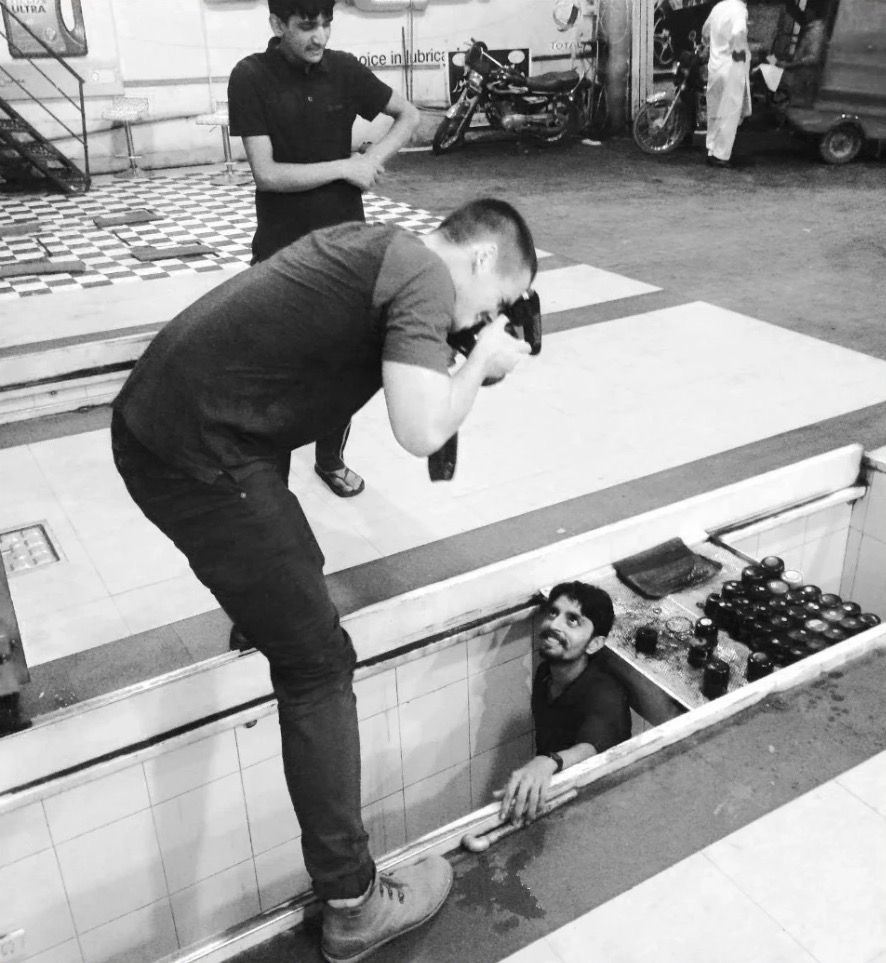
Sam photographing a mechanic working in an inspection pit at a truck stop in Pakistan
See my documentary photography →

Insight & strategy

I’ve spent 14 years in research, insight and strategy, looking at how people live, how culture shapes what they do, and where that leaves room for brands to play a meaningful part.

I’ve worked in almost every category, adding a creative and strategic layer to research: audience understanding, positioning, comms strategy and innovation. Most of it sits where culture, behaviour and brand ambition meet.

Doing the work is only half of it. If people don’t get it or believe it, nothing happens. So I put as much effort into how ideas are found and how they’re told, using creative approaches to get to something new and telling the story in a way people remember and act on.

I also spent four years as Global Head of Business Development. I grew an agency, opened a US office and hit targets by sharpening the offer, building trust and winning work that deserved to exist.

These days I work independently with agencies and brands, on everything from insight to brand design. I help teams build strategies rooted in how people really live and what they care about, so the work earns its place in culture. I also help agencies grow by sharpening their proposition, strengthening their team and getting them where they want to be.

Selected work

There’s no shortage of Gen Z insight reports in the world. I’d been writing them for about 10 years by the time Diageo North America came to us. Because of responsible marketing rules, they’d had to wait until enough of this generation was over 21 before they could properly dig in.

The bigger problem was the number of assumptions flying around about this audience, in a business where most people weren’t part of it. A lot of the existing “insight” had come through an innovation lens instead of starting with the audience themselves.

So we built FutureProof, a Gen Z insight platform for Diageo. We ran national quant and a digital ethnography, then city meet-ups where Diageo’s teams could meet Gen Z in person and learn from them directly.

Diageo came away with a clear, detailed picture of who Gen Z actually are. They understood what this generation expects from alcohol brands, what turns them off, how they socialise, what “treating” looks like, how they make choices, and where drinking fits into their lives (or doesn’t). The work also turned up new need states, new occasions and gaps in the category that no brand was speaking to.

All of this shaped a focused innovation strategy across the Diageo portfolio. It also gave teams a shared language and the confidence to make products, experiences and comms that resonated with Gen Z, instead of guessing.

When I was younger, rum and coke at midnight in a club felt like the height of fun. High-energy nights have changed since then, and so has what fun means to a new generation.

Captain Morgan had always been a light-hearted, playful brand, but the world had shifted around it. The brand was still growing globally, but in the US it had been flat for years and was losing relevance with younger drinkers. Its old idea of “fun” felt narrow, tied to a drinking culture that didn’t match how Gen Z socialises.

We needed to move the brand away from its frat-y, high-octane past and understand what fun looks like now (the moods, the energy, the occasions) and what this generation wants from a brand like Captain Morgan.

We worked across North America, Europe and Africa to map how Gen Z’s social lives, behaviour and needs had changed. Brand workshops turned those insights into a new strategic direction and explored how Captain Morgan could show up in design, innovation and creative work in a way that felt modern, warm and inclusive.

The result was a refreshed positioning, a new masterbrand design, an innovation strategy and creative work that helped the brand grow again.

It’s always a fun challenge working on a product you don’t enjoy (I don’t like coffee), but the strategic task was great.

Nespresso Subscription was struggling. The boutique felt like a small luxury and the subscription felt like the opposite: premium everywhere except the one place meant to keep people loyal. We needed a proposition that built the brand and still hit hard acquisition and retention targets.

We started by finding out what was really happening. Quant showed attitudes and barriers at scale, digital ethnography showed how people bought, drank and talked about Nespresso, and hands-on coffee workshops let people play with the experience and show us where subscription added value and where it fell flat.

From there, we reimagined what subscription should be: more flexibility, curated selections, better delivery moments, clearer benefits and service cues that felt premium.

We delivered a new strategy for acquisition, experience and retention, and in the first year it brought Nespresso its biggest subscription growth in the UK.

Probably the project I’ve talked about most, and the reason friends and family think I’m obsessed with truck drivers. I might have spoken to more drivers than anyone on the planet (about 835 across 10 countries).

Shell’s challenge was simple: they didn’t really know one of their biggest consumer groups. Truck drivers buy huge amounts of heavy-duty engine oil to keep their trucks moving. It’s a billion-dollar product in a brutally competitive category.

To win, Shell needed to communicate with them better than anyone else, but its teams and agencies couldn’t realistically travel the world to meet drivers. So we brought the drivers to them.

We spent weeks across the US, China, India, Pakistan, Vietnam, Thailand, Indonesia, Russia, Brazil and Egypt interviewing drivers, photographing and filming their lives, and using 360 video to capture everything from cabins to the small hotel rooms they treat themselves to. We also used drones to show bird’s-eye views of truck stops and the journeys in and out of them.

All of it went into an interactive microsite called The Listening Post, which gave Shell and its agencies insight and inspiration on demand. We then ran workshops in London, Shanghai and Houston that put Shell teams in the shoes of one of their most important customers.

We started working with ASICS at an important moment. Once the go-to brand for serious runners, it had slipped into the middle of the pack, losing share, relevance and a clear sense of who it was designing for. Our job was to understand the running world and give ASICS a way to grow with committed runners and with the huge wave of newer, more casual ones.

We built a global segmentation of 9,000 people in six countries, combining quant with deep qualitative work. I spent time out with runners (talking, watching and trying to keep up) to understand the behaviour and emotional triggers that don’t show up in a survey.

Projective exercises were a big part of it. They took us past rational motivations and basic purchase decisions to the identity, meaning and role running has in people’s lives.

Six clear segments came out of it, from dedicated marathoners to parkrun regulars to people who run to reset their mind. We then travelled to ASICS teams around the world to embed the segmentation, so it became a practical tool across product, marketing and research.

Within a year, ASICS reported 143% brand growth. A global typing tool now lets future work plug into the segmentation and cuts out redundant research.

I think this was one of the first Gen Z insight reports ever done. Lucozade wanted to establish itself early as an authority on this generation, so the project was as much about publicity as understanding. It was “research as content.”

We travelled across the UK doing street interviews and meeting young people who were already making an impact: starting businesses, campaigning, building communities or making waves in their own corner of the world. We wanted to hear from the people shaping culture themselves.

We also spoke to experts who helped put what we heard in context: the social, economic and cultural forces shaping this generation, and the opportunities and problems ahead of it.

We made a public report, a YouTube series and even a newspaper that was handed out across London. Lucozade showed up with something to say, and the insight started conversations instead of sitting in a deck.

Another of my favourite projects. Sony Music had loads of data on UK Gen Z rap fans, but the team didn’t feel the business really understood them. They asked us to dig deeper and build a programme that would get their people up close with the audience.

Going in, we knew two things. First, this group wouldn’t engage with a traditional research approach. Second, most consumer-closeness events feel pretty sterile.

So we created Pave, a zine about UK rap. We built a brand for it and put a call-out on social for contributors, and making the zine with them taught us about their attitudes, behaviour and unmet needs.

We then held a launch event that brought the insight to life and let Sony’s teams meet fans in a way that felt natural.

Working with Nike is a dream brief for most people, but digging into something as complex as mental health was equal parts exciting and terrifying.

Nike has always put performance first. Like a lot of sports brands, it has often talked about mental strength and grit as the traits of a successful athlete, and that sits uncomfortably with how we now think and talk about mental health.

We worked with Nike to understand what mental health looks like in the context of physical activity, from the US to Scandinavia to Asia, using voice-note diaries and in-person ethnography. The aim was a way into the subject that felt true to Nike.

The stories we found fed into an insight exhibition on the Nike campus in Portland, where more than 500 employees spent time with the work and the opportunity it pointed to.

How I can help

Research & insight

  • I’m solid on all the core qualitative and cultural methods, as you’d expect after this long, but I always push past the obvious brief.
  • I’m known for designing creative approaches that get under the surface to what people actually think and feel.
  • Photography and film sit at the heart of how I see the world, and they shape the way I capture and tell stories.
  • I design research that clients feel as much as understand, and don’t forget.
  • I also care about what happens to insight afterwards, which is why I make zines, short films and workshops that make the strategy feel real.

Strategy & innovation

  • Turning insight into clear strategy: simple ideas that teams can work with.
  • Brand positioning that feels human and grounded in culture.
  • Communication and creative strategy, shaping the story as well as the slide.
  • Innovation work that finds opportunities people can act on.
  • Telling the strategy as a clear story, so it feels alive.

Growth & consulting

  • Using my insight and strategy background in business development: knowing what to say, how to say it and what lands with clients.
  • Creating offers and propositions that feel sharp and believable.
  • Developing new products and ways of working that agencies can actually sell.
  • Building pitch strategies that win the clients you want to work with.
  • Writing thought leadership that cuts through and gives readers something useful.
  • Helping agencies tell a clearer story about who they are and why they matter.
  • Mentoring teams on confidence, communication and selling ideas without feeling like you’re “selling.”

Training & coaching

A lot of training in the industry is underwhelming. It tends to be heavy on strategy theory or stuck in research technique.

What’s missing is the middle: how to help people grow, communicate better and make work that wins.

  • Creative and innovative research design and skills
  • How to think, act and write like a journalist
  • What clients really want
  • New business skills for people who hate new business
  • Brand and innovation strategy fundamentals for researchers

Experience

  1. 2024 to 2025

    jump! Innovates Head of Dynamics (Cultural & Consumer Insight)

    jump! is an innovation and strategy consultancy that helps brands find new ways to grow. I led Dynamics, the division combining cultural insight, human understanding and strategic thinking.

    • Built and developed the Cultural and Human Insight studios, which shaped the agency’s thinking and the team’s skills.
    • Turned research into strategic provocations and tools for clients, which fed into creative, brand and innovation work.
    • Coached and developed a mixed team of researchers and strategists.
    • Led the repositioning of MotoGP and Birra Moretti, which shaped their communications and innovation strategies globally.
  2. 2018 to 2024

    The Mix Head of Insight & Managing Partner

    The Mix is a creative insight and strategy agency that turns an understanding of people into commercial growth, with the aim of putting insight at the centre of decision-making.

    • Won, led and delivered strategic insight projects with real business impact, covering audience segmentation, brand positioning and comms, innovation and complex cultural topics.
    • Developed new creative methods, including pop-up bars in Africa and Europe where Diageo’s disrupt team could test and fast-track new ideas.
    • Created research and strategy frameworks that made the agency’s name, raised the team’s skills and deepened client relationships.
    • Mentored teams of researchers, strategists and creatives, building a culture where rigour met creative thinking.

    In my leadership and growth role:

    • Helped grow the business from 10 people in one office to 40+ across London and New York.
    • Led the US expansion, beating first-year revenue targets and building a five-person team in New York.
    • Delivered £1.7m+ in global revenue every year for four years (£2.5m in the final year).
    • Broadened the client base, adding brands such as Lego, Nike, New Balance, Footlocker, Reckitt Benckiser, Premier Foods and Kraft Heinz.
    • Wrote The Mix’s overall proposition, and the proposition for a new data strategy spin-off.
    • Led thought leadership, secured speaking slots and won industry awards.
    • Built an agency culture of innovation with a clear purpose: to shake up the industry and drive growth.
  3. 2015 to 2018

    BAMM Associate Director

    BAMM is a global insight and strategy agency that moves clients to act through strategic research.

    • Specialised in using insight to influence, making physical and digital outputs that brought research to life.
    • Made films, reports and activation tools for clients including Unilever, Shell and Lucozade.
    • Focused on making research useful, memorable and easy to share inside large organisations.
  4. 2012 to 2015

    Tonic Insight Executive to Insight Manager

    Tonic specialises in consumer journeys and online communities for brand development.

    • Learned a broad range of research methods and tools, which became the foundation for my strategic thinking.
    • Learned project management and how to work across teams to solve problems for clients.

For insight, strategy and growth projects: samwlipscomb@gmail.com